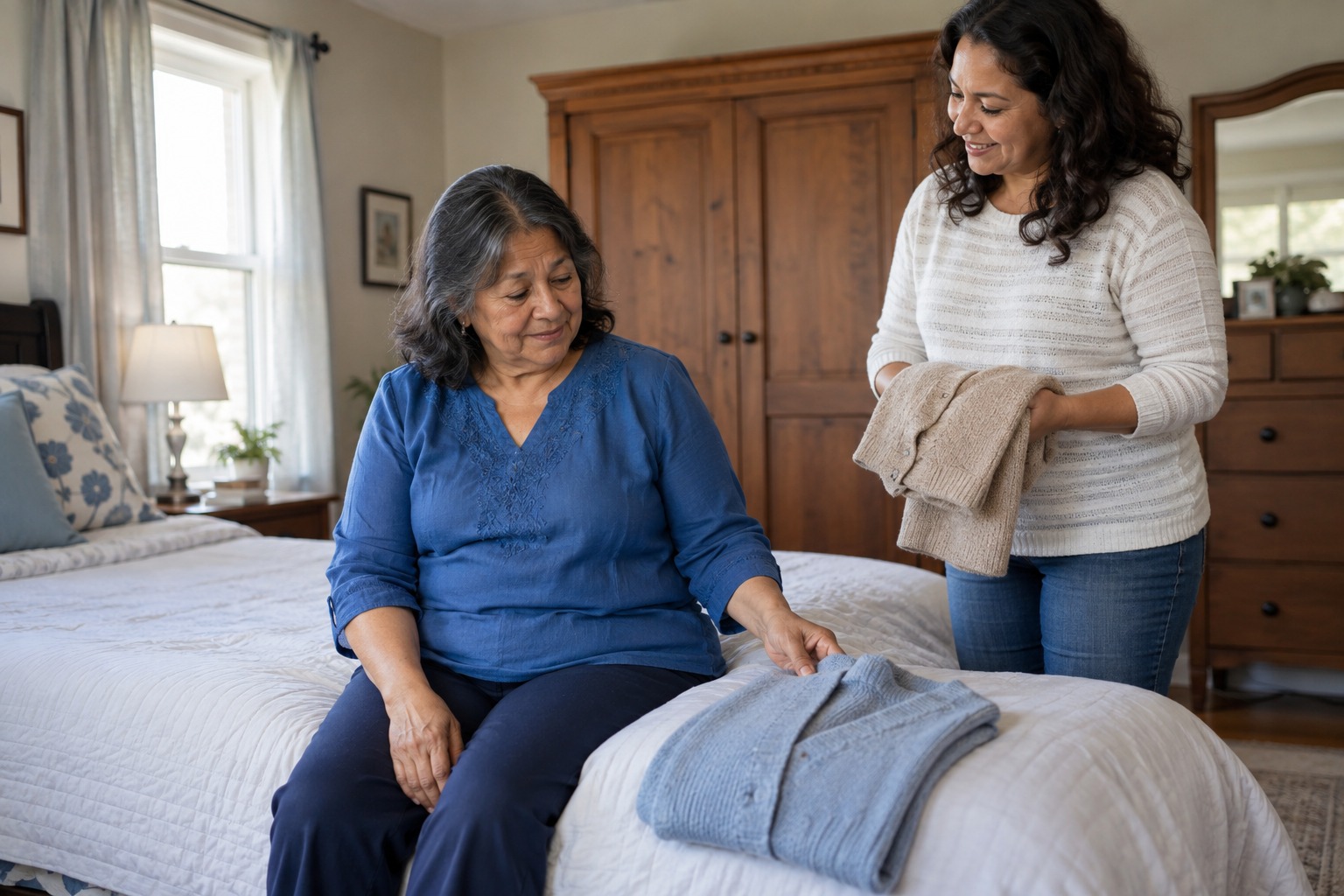
Activities of Daily Living List: A Complete ADL and IADL Guide
Understand basic ADLs, instrumental tasks, and the different levels of daily assistance.
Read Article
Quick answer:
A winter safety checklist for seniors in Wisconsin should cover reliable indoor heat, clear walking routes, essential supplies and a backup plan for daily help. Older adults may need extra support during extreme cold, so agree in advance who will check in and where to go if the home loses heat.
An icy doorstep can interrupt more than a trip outside. It may keep a grocery delivery or an expected visitor from reaching the door. Preparing together before a storm gives everyone time to decide which jobs they can realistically handle.
Use this checklist with the older adult's preferences in mind. Start with the parts of the day that would become difficult if the weather changed tomorrow.
The Wisconsin Department of Health Services winter-weather guide recommends an annual furnace check by a qualified technician. Ask a homeowner, landlord or property manager who will arrange it and which number to call if the heat stops working.
Put an easy-to-read thermometer where the person spends time. DHS notes that the ability to sense temperature changes can decrease with age, so feeling comfortable alone may not reveal that a room is getting too cold.
Check smoke and carbon monoxide alarms according to the manufacturer's instructions. If a portable heater is used, keep flammable items away, plug it directly into a wall outlet and turn it off before sleeping or leaving it unattended. Never use a stove or oven to heat the home.
Generators belong outdoors. Wisconsin's carbon monoxide guidance says never to run one within 20 feet of the house, inside a garage or beside doors and windows. Leave equipment setup to someone who understands its safety instructions.
Decide who will clear the route from the door to the sidewalk or vehicle. Get that person's agreement before a storm, whether the contact is a family member, property manager or snow-removal contractor. Do not assume the usual visitor can do it.
Check the same route after snow melts and refreezes. Look for water tracked indoors, loose mats and poor lighting near the entrance. Keep coats and boots out of the walking path.
Sturdy rubber-soled boots can help with traction, but footwear does not make an icy route safe. Avoid an unnecessary trip while conditions are hazardous. Ask the person's care team about individual mobility concerns rather than trying a new walking aid without guidance.
DHS recommends keeping a three-day supply of nonperishable food and water. Choose food the person can eat within any prescribed dietary restrictions, including options that do not require cooking if power is lost.
Check that the household has:
Ask the pharmacy about upcoming refills before bad weather affects travel. If medicine needs refrigeration or a person uses electrically powered medical equipment, ask the qualified care team for specific outage instructions in advance. Keep those instructions with the household plan.

A list of phone numbers is useful only if people know what they have agreed to do. With the older adult's permission, fill in this sheet together. Keep a paper copy somewhere easy to find and give agreed contacts the details they need.
Scroll sideways to view every column.
| Task or concern | Person or service that has agreed to help | Backup arrangement to confirm |
|---|---|---|
| Heat stops working | Heating contractor, landlord or property manager | A warm place to go and a safe way to reach it |
| Snow or ice blocks the door | Agreed family contact or property-maintenance service | Someone to call if the first contact cannot come |
| Groceries or supplies run low | Family contact or confirmed delivery service | Food available if a delivery is delayed |
| A planned care visit is delayed | Agency scheduling contact and agreed family contact | Who can provide the necessary help safely |
| A check-in call is missed | A willing nearby contact | The next person to contact and the agreed response |
These are planning prompts, not promises that a provider or neighbor can respond. Confirm availability and access arrangements. A spare key or entry code should be shared only with authorized people.
Ask an agency what happens when weather delays a visit, who to contact and what backup arrangements the family needs. If someone depends on timely hands-on assistance, discuss that need before the next storm. A phone call cannot replace necessary in-person help.
Add seasonal arrangements to the person's year-round care plan. If you live elsewhere, our long-distance caregiving guide explains how to agree on local contacts and useful updates without taking over decisions.
Do not wait for the next routine visit if there is an immediate emergency. Confusion, slurred speech or unusual drowsiness after cold exposure can be warning signs of hypothermia. Call 911 for a medical emergency or immediate danger.
If a carbon monoxide alarm sounds, move everyone outside into fresh air and contact the fire department. Do not return until responders say it is safe.
If the home loses heat, use the backup plan before the situation becomes dangerous. The Milwaukee Health Department's cold-weather resource page directs people to 211 for warming-shelter information. Confirm current hours, access needs and transport before setting out; 211 is not emergency response.
Difficulty keeping up with groceries, meals or everyday household tasks may call for a conversation about regular help. Support Plus Personal Care provides supportive care at home, including errands, light housekeeping and companionship according to the agreed care plan.
Ask which tasks your caregiver can support and what scheduling arrangements are available. Snow removal, furnace repairs and emergency response need their own arrangements.
For families in Milwaukee and nearby Southeast Wisconsin communities, call 262-420-4008 to discuss the daily tasks that have become difficult. Bring the winter task sheet so the conversation starts with the help the person actually wants.
This checklist is household-preparation information. Follow the person's qualified care team's advice for medical needs and emergency instructions.
Understand basic ADLs, instrumental tasks, and the different levels of daily assistance.
Read Article
Prepare questions about daily routines, preferences, and the first service conversation.
Read Article
Compare agencies, caregiver screening, communication, schedules, and available services.
Read ArticleTell us which daily routines need support, and our team can explain the Support Plus services that may fit an authorized care plan.