
In-Home Personal Care: 7 Hygiene Tips for Comfort and Dignity
Personal hygiene is more than cleanliness -- it is directly linked to health, comfort, self-esteem, and quality of life. Here are 7 essential tips.
Read Article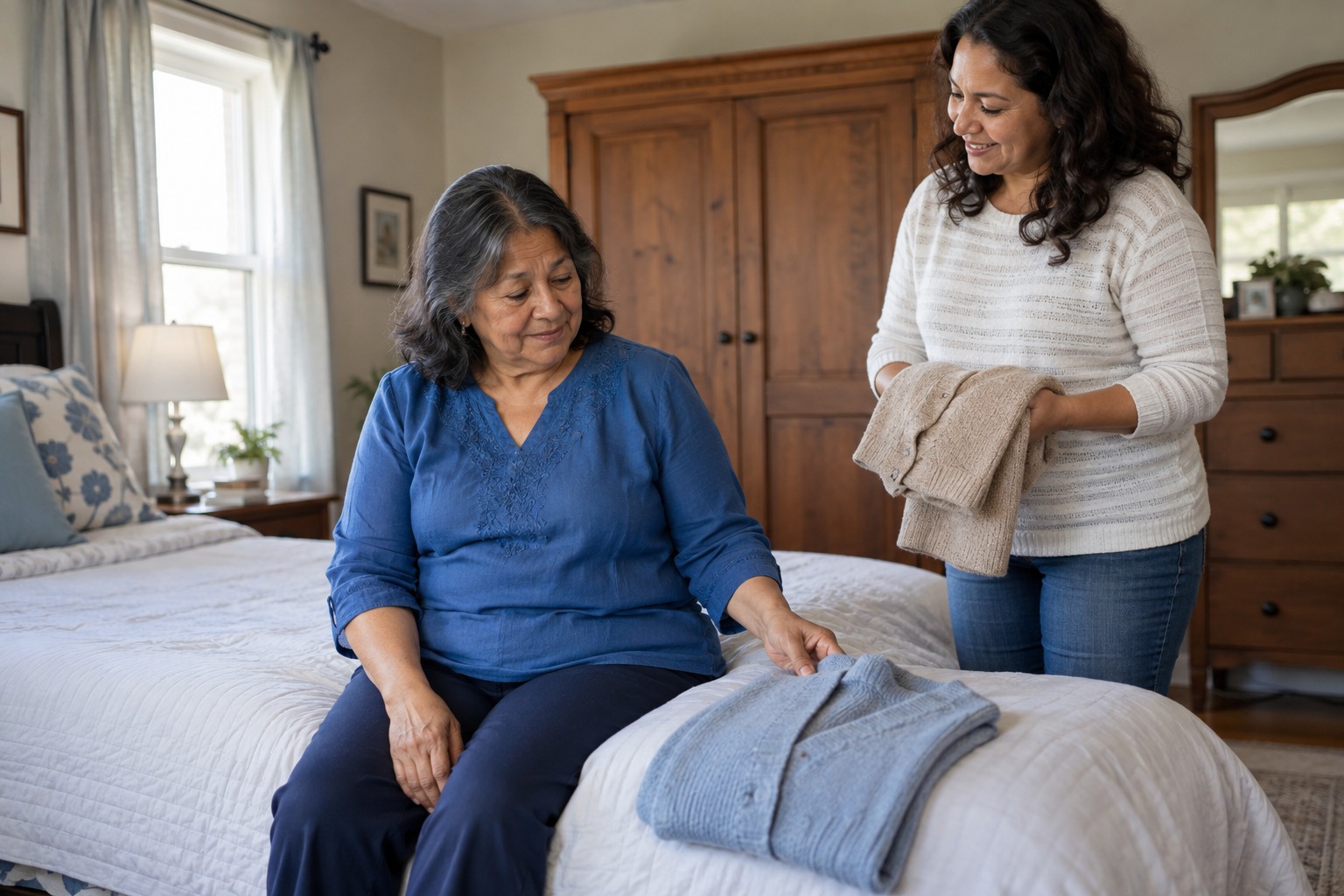
This activities of daily living list explains the basic ADLs and instrumental tasks used to understand how independently a person manages everyday life. Basic activities of daily living, or ADLs, cover essential self-care. Instrumental activities of daily living, known as IADLs, involve more complex household and community tasks.
Different assessment frameworks organize these activities in different ways, so you may see lists containing six, seven, ten, or more items. This guide explains those differences and helps you recognize the levels of assistance a loved one may need.
It is educational information, not a diagnosis or a substitute for an assessment by a qualified professional.
The following table separates six commonly recognized basic ADLs from instrumental tasks that support independent daily life.
| Basic ADLs | Instrumental ADLs |
|---|---|
| Bathing and personal hygiene | Meal preparation |
| Dressing | Medication management |
| Toileting | Shopping and errands |
| Transferring and mobility | Transportation |
| Continence | Housekeeping and laundry |
| Eating and feeding | Communication |
| Money management |
Basic ADLs focus on caring for your body. IADLs require planning, organization, judgment, or interaction with the surrounding community.
Published tools may group these activities differently. One framework might combine toileting and continence, while another counts them separately. Some include grooming as its own ADL, and others place it under bathing or dressing. The name of the assessment tool matters more than the total number of items.
What are the six basic ADLs? They are bathing, dressing, toileting, transferring or mobility, continence, and eating or feeding. Each activity can involve several smaller actions, and a person may manage some parts independently while needing support with others.
Bathing includes getting into and out of a shower or tub, washing the body, drying off, and completing routine hygiene tasks. Independence may also involve safely gathering supplies and adjusting the water.
Someone might need a verbal reminder to begin bathing, supervision while stepping into the shower, or hands-on assistance washing a hard-to-reach area. These are different levels of support. Families considering help with bathing and personal hygiene should focus on the person's comfort, privacy, and preferences.
Dressing involves selecting suitable clothing, putting it on in the correct order, managing fasteners, and removing garments when needed. Weather, planned activities, and personal style are part of the routine.
A person may choose clothing independently but need prompting to change a stained shirt. Another person might need physical help with buttons, shoes, or compression garments. Our information about dressing and grooming support covers assistance related to these personal routines.
Toileting includes recognizing the need to use the toilet, getting there, managing clothing, cleaning afterward, and transferring on or off the toilet. It should be discussed with care because privacy and dignity matter.
Support may range from a reminder to use the bathroom to supervision during a transfer. Some people require hands-on help with clothing or hygiene. Families can review information about toileting and continence support when considering how these needs affect daily routines.
Transferring means moving between positions or surfaces, such as getting out of bed or rising from a chair. Mobility can include walking within a room, using stairs, or moving with an assistive device.
One person may need someone nearby while standing. Another may require physical assistance during a transfer. Difficulty with movement can have many causes, so an ADL checklist cannot explain why a change has occurred.
Continence refers to control of bladder and bowel function. Some ADL tools also consider whether a person can manage related products, clothing, and hygiene independently.
Support might involve reminders, help changing protective garments, or hands-on assistance with cleanup. Continence is sometimes combined with toileting in an assessment, which is one reason ADL lists do not always have the same total.
Eating includes bringing food and drink to the mouth and completing a meal. Depending on the framework, cutting food, opening containers, or using adaptive utensils may also be considered.
A person might eat independently after food is prepared but need reminders to continue the meal. Someone else may require hands-on feeding assistance. Meal planning and cooking are generally classified as IADLs rather than basic feeding.
Changes across any of these activities can help families describe support needs. Our overview of personal care support provides further context for daily self-care assistance.
Instrumental activities of daily living are more complex than basic self-care. They help a person manage a household, follow routines, and participate in community life.
Changes in IADLs may appear before changes in basic ADLs. But difficulty with one instrumental task does not establish a medical diagnosis, determine eligibility for a program, or show that a person cannot live independently.
Meal preparation may involve choosing food, following a recipe, using appliances, and cleaning up. Shopping and errands require making a list, locating items, arranging transportation, and completing purchases. Housekeeping and laundry involve maintaining a reasonably clean environment and handling clothing or linens.
For example, a person may still feed themselves but struggle to plan balanced meals or use the stove safely. Families can read about meal preparation and nutrition support or consider whether help with errands fits the observed need.
Medication management can include following an established schedule, opening containers, and noticing when a refill is needed. Communication covers using a telephone or other device, understanding messages, and contacting the right person. Transportation may involve driving, arranging a ride, or navigating public transit.
Money management includes paying bills, tracking spending, and recognizing unfamiliar charges. These tasks draw on several abilities at once, which makes specific observations useful. Rather than saying a loved one is "bad with medications," record what happened and how often. Our medication monitoring information can help families identify questions to discuss.
There is no single universal total for every activities of daily living list. The answer depends on the framework being used and how it defines each task.
Some lists count transferring and mobility separately. Others combine continence with toileting, add grooming as a distinct item, or mix basic ADLs with instrumental activities. Clinical and care-planning tools may also use different scoring methods. The National Library of Medicine's overview of activities of daily living describes ADLs and IADLs as related but distinct measures of everyday function.
So, what are the 10 activities of daily living? What are the 12 daily activities of living, or the 14 activities of daily living? Each question needs the name of the framework before it has a reliable answer. A ten-item list might combine six basic ADLs with four instrumental tasks, while another tool could define ten items differently. The same principle applies to twelve-item and fourteen-item versions.
Check the tool's labels and definitions. The number alone tells you very little.
An ADL assessment is a structured review of how a person performs everyday tasks. It is not a diagnosis. A qualified professional may consider task performance alongside health history, cognition, mobility, the physical environment, and specific safety observations.
Support is more useful when described precisely:
The right description may vary by activity. Someone could dress independently, need supervision when bathing, and require hands-on help when transferring.
Keep notes about observable changes rather than trying to identify the cause yourself. Useful details include:
A sudden or severe change should be discussed promptly with an appropriate healthcare professional. Bring your notes, medication information, and questions so the conversation reflects what is happening in daily life.
Look for patterns rather than treating one difficult day as proof of a lasting problem. Observable signs can include:
Approach the conversation respectfully. Ask what feels difficult, what the person wants to keep doing independently, and what kind of help would feel acceptable. New, sudden, or concerning changes warrant a conversation with an appropriate healthcare professional.
Start with the person's preferences. A calm conversation about one specific task often feels more respectful than presenting a long list of concerns all at once.
Keep a brief record of changes and note whether they form a pattern. If the change is sudden, severe, or concerning, contact an appropriate healthcare professional. A structured evaluation can help clarify current function without assuming a diagnosis or a particular outcome.
If your family wants to discuss practical support for established daily needs, review our supportive care services. We can answer questions about our available services, but healthcare professionals and applicable programs make their own assessment, eligibility, and authorization decisions.
No. ADLs are basic self-care activities, while IADLs are more complex tasks used to manage a household and participate in community life. Both can be considered during a functional assessment.
No single item determines that. The type, frequency, and context of the assistance matter, along with the person's environment, preferences, and broader support needs.
Personal hygiene is more than cleanliness -- it is directly linked to health, comfort, self-esteem, and quality of life. Here are 7 essential tips.
Read Article
A home care plan is the foundation of effective care at home. Follow these 7 steps to build one that works for your family.
Read Article
Explore the full spectrum of elderly care options, from in-home support to assisted living. A clear roadmap from assessment to action.
Read ArticleOur team is here to answer your questions, walk you through your options, and help you take the next step, at your own pace, with no pressure.