Activities of Daily Living List: A Complete ADL and IADL Guide
Understand basic ADLs, instrumental tasks, and the different levels of daily assistance.
Read Article
Personal care for an adult with a traumatic brain injury (TBI) can include help with washing, dressing, meals, and other everyday activities, depending on the person's needs and care plan. It is different from medical treatment or rehabilitation. The goal is to provide appropriate assistance while keeping the adult's preferences and participation central.
For families, the challenge is often figuring out what that means during an ordinary day. Who helps with the morning routine? Which tasks can the person handle independently? What information needs to pass from one caregiver to the next?
This guide focuses on arranging non-medical support, not treating a brain injury. Medical questions and changes in care needs belong with the person's healthcare team.
Two adults with TBI may need very different kinds of assistance. One might want help getting dressed but manage their own calendar. Another might handle personal hygiene independently while needing assistance keeping track of appointments and household tasks.
The Model Systems Knowledge Translation Center explains that moderate to severe TBI can affect remembering recent information and future commitments. It also describes everyday supports such as notebooks, calendars, and checklists. Ask the person's care team which approaches fit their situation, rather than introducing a generic routine based on the diagnosis alone.
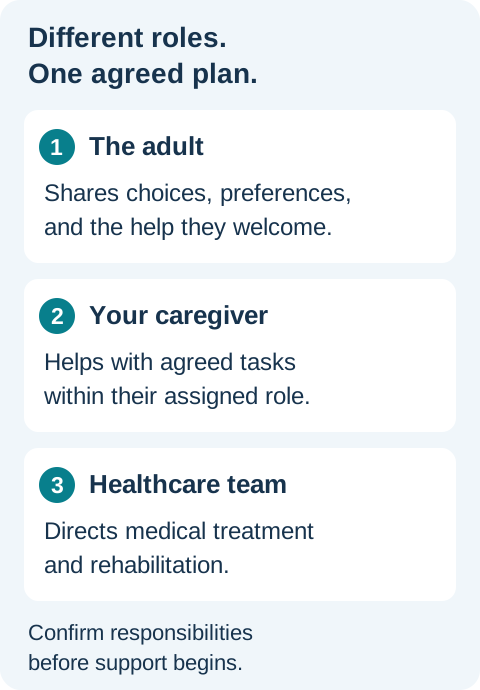
Include the adult directly in the conversation, using their preferred way of communicating. Ask what they want to do themselves, where they welcome help, and what makes assistance feel intrusive. A useful care arrangement describes both needs and abilities.
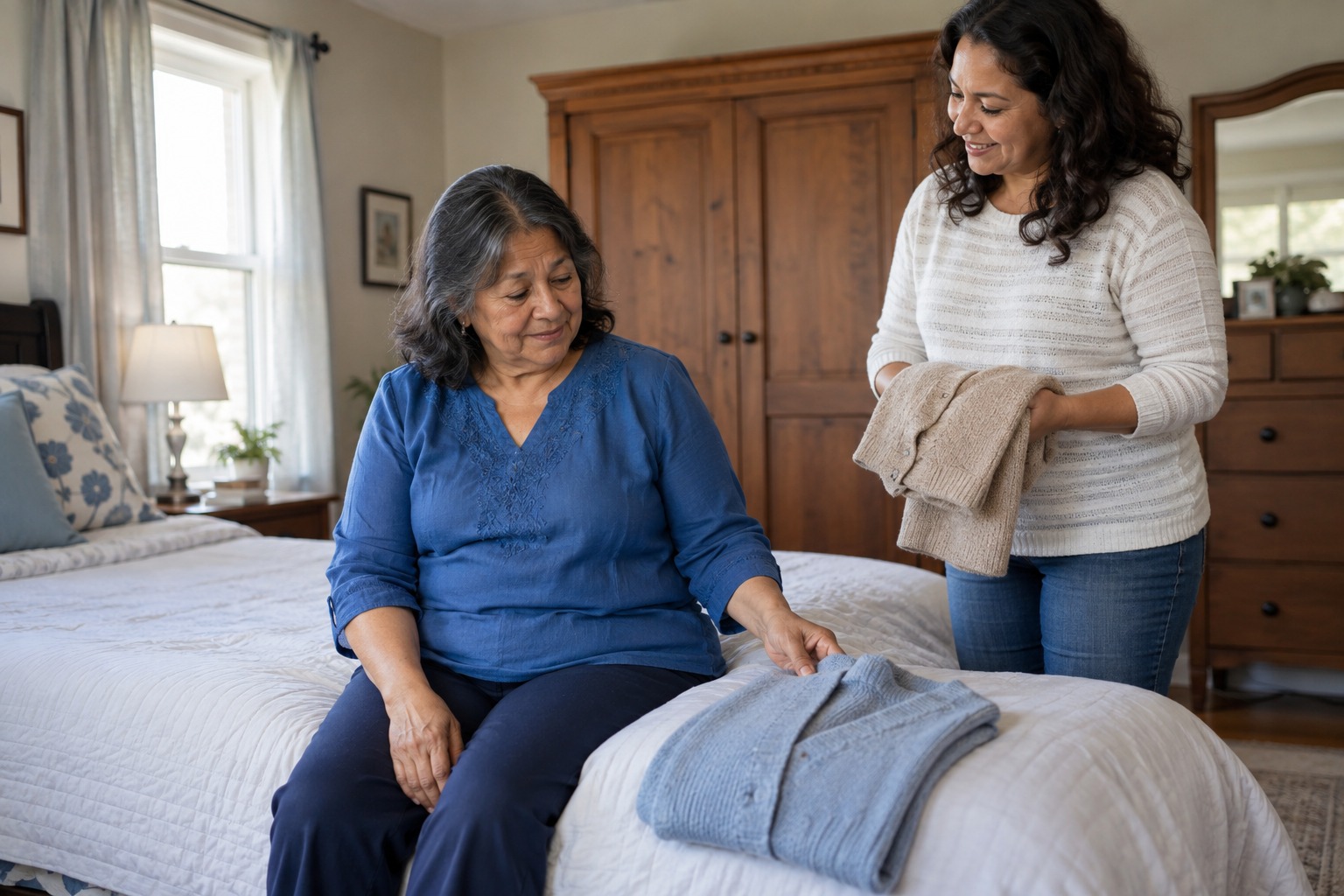
Depending on the agreed responsibilities and any required authorization, personal care may involve assistance with bathing, dressing, grooming, toileting, or getting around. The amount of help should reflect the person's individual plan, not an assumption that every task needs to be taken over.
Everyday support may also include preparing a meal, keeping clothing organized, or helping the person get ready for a scheduled appointment. Confirm which tasks are available, who is responsible for them, and whether they fall within the approved services.
For a broader explanation of everyday task categories, see our activities of daily living guide.
A personal care worker's daily assistance is not a substitute for rehabilitation, medical assessment, or therapy. Your caregiver should follow the agreed plan and stay within their assigned role, rather than create exercises or change clinical instructions.
If a task involves hands-on assistance that requires specific training, discuss that need before services begin. A family should not have to discover during a visit that the task is outside the worker's responsibilities.
Instead of starting with a long list of everything someone might need, walk through one typical day together. Identify where support is actually needed and when another person is already available.
For example, a relative may be available during breakfast but leave before the adult gets dressed for a community activity. Another family may need help preparing an evening meal rather than additional morning assistance. These are planning examples, not recommended care schedules.
Useful questions include:
Make the arrangement specific enough that everyone understands their role without turning the person's day into a rigid checklist. Revisit it when the adult or their care team identifies different needs.
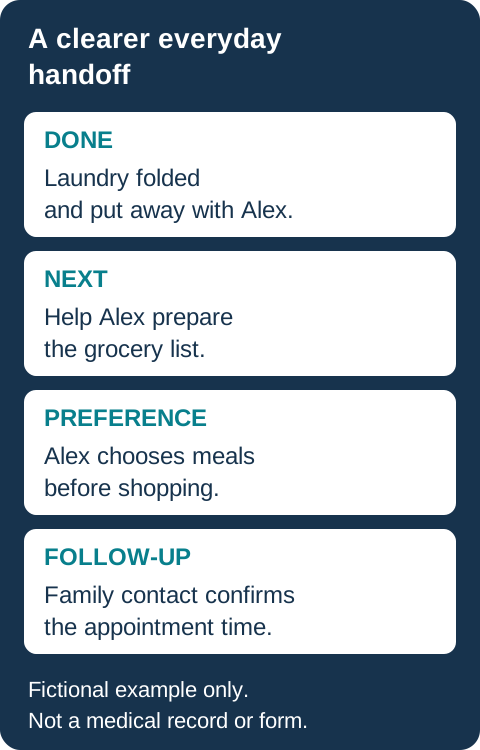
When several people share responsibilities, a short, agreed handoff can help avoid confusion about everyday tasks. Use a format the adult is comfortable with, and share information only with the people who need it.
An illustrative handoff might read:
Completed: laundry folded and clothing put away with Alex.
Next agreed task: help Alex prepare the grocery list.
Preference: Alex wants to choose meals before shopping.
Coordination: tomorrow's appointment time still needs confirmation by the family contact.
Alex is a fictional example, not a Support Plus client. This is not a medical record or a required agency form. Follow any documentation procedures that apply to your actual care arrangement.
The point is to make responsibilities visible without replacing the adult's choices or asking a personal care worker to interpret medical information.
For older adults and adults with disabilities, a local Aging and Disability Resource Center can be a starting point for unbiased information about resources and long-term support options. Wisconsin ADRCs serve residents regardless of income. That access to information does not mean someone automatically qualifies for funded services.
If you are already a Family Care member, speak with your MCO care team about the help you need. Wisconsin DHS lists personal care among Family Care's possible benefits, but services must be approved by the care team before they are received. A TBI diagnosis alone is not a guarantee of coverage or a particular number of hours.
Support Plus does not determine benefit eligibility or handle benefit applications. An agency conversation about services and a program's approval process are separate steps. Our personal care assessment guide explains how to prepare for the service conversation.
That possibility depends on the applicable program, the person's authorization, the family relationship, and employment requirements. Do not assume that providing unpaid help now guarantees paid employment later.
Our Wisconsin paid-family-caregiver guide covers the questions to explore. Confirm the rules for your situation with the relevant program and prospective employer before relying on a payment arrangement.
You do not have to find every resource through a personal care agency. The Brain Injury Association of America's Caregiver Information Center offers education and connections to brain injury resources. The Brain Injury Resource Center of Wisconsin also lists caregiver resources and support-group links. Check directly with the organization for current availability.
If you are exploring personal care in Milwaukee or nearby Southeast Wisconsin communities, call Support Plus Personal Care at 262-420-4008 or contact us. We can discuss everyday assistance needs and whether Support Plus can support the existing care plan. Available services and any required authorization must be confirmed for the individual.
Understand basic ADLs, instrumental tasks, and the different levels of daily assistance.
Read Article
Review the eligibility, authorization, and hiring factors that can affect paid family caregiving.
Read Article
Compare agencies, caregiver screening, communication, schedules, and available services.
Read ArticleTell us which daily routines need support, and our team can explain the Support Plus services that may fit an authorized care plan.