What Is a PCW? Becoming a Personal Care Worker and the Qualities That Matter
Learn what a Personal Care Worker does, which qualities matter, and how the role supports Wisconsin clients.
Read Article
The words caregiver and caretaker are sometimes used as if they mean the same thing. In everyday conversation, both can describe someone who looks after another person. However, caregiver is usually the clearer term when you mean a family member or professional who supports a person's daily life.
The difference between caregiver and caretaker becomes especially important when a family is comparing services, discussing a paid role, or reviewing a care plan. Neither word by itself tells you what tasks a person can perform, how they are trained, or whether services are covered.
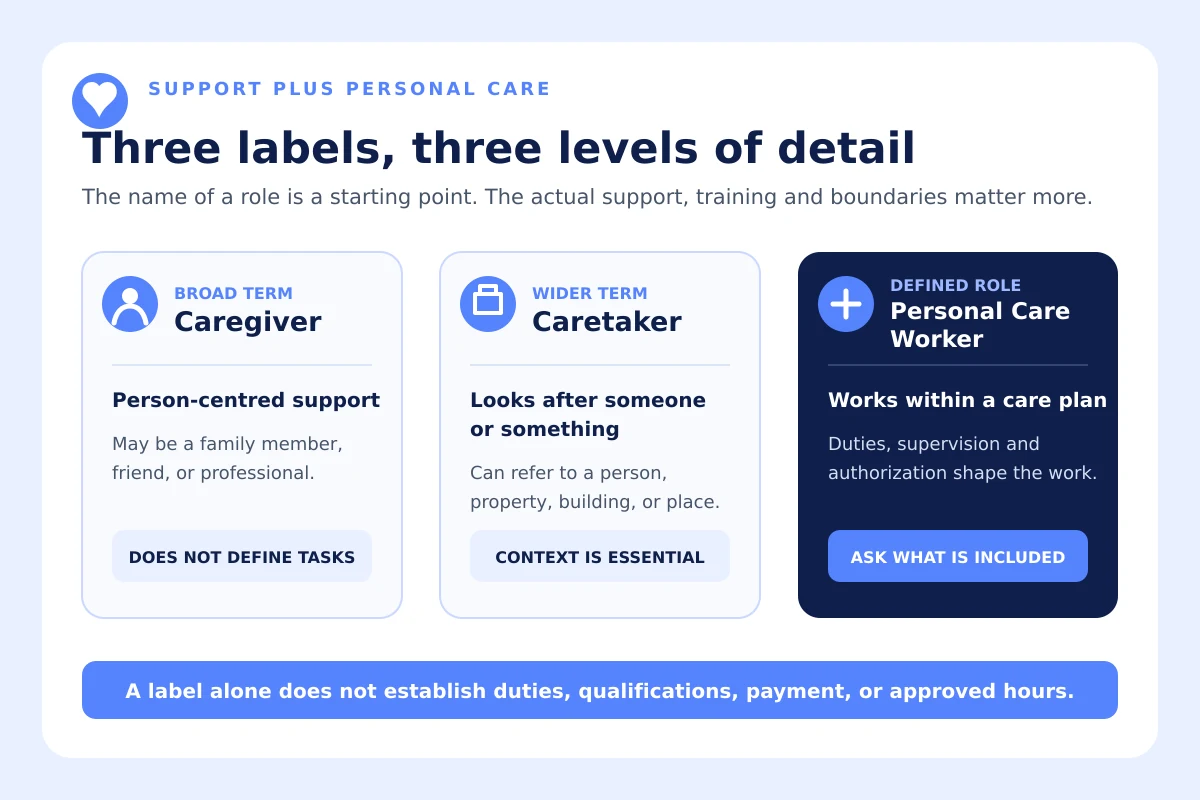
A caregiver provides ongoing support to a person. A caretaker is a broader term that can refer to someone responsible for a person, property, building, or place. Some families still use caretaker to mean caregiver, so context matters.
| Term | Common meaning | What the term does not prove |
|---|---|---|
| Caregiver | A person who supports someone with daily routines, comfort, safety, or independence | Whether the person is paid, trained, employed by an agency, or authorized for specific tasks |
| Caretaker | A person responsible for looking after someone or something | Whether the role involves personal care, household upkeep, property management, or another responsibility |
| Personal Care Worker | A defined care role that may include assistance with daily activities under an established plan | Which services or hours apply to a particular person without an assessment and authorization |
A caregiver is someone who helps another person maintain daily routines and quality of life. The caregiver may be an unpaid relative or friend, or a paid worker employed through an agency or another approved arrangement.
Depending on the person's needs and the caregiver's role, support might include help with dressing, bathing, mobility, meals, light housekeeping, errands, companionship, or getting to appointments. A professional caregiver should follow the person's care plan and the boundaries of the job.
Caregiver is therefore an umbrella term. It describes the relationship to care, but it does not automatically identify a credential, job title, or source of payment.
Caretaker has a wider range of meanings. A caretaker might look after a building, property, grounds, animals, or a person. When the word refers to a person, it may describe the same practical relationship that another family calls caregiving.
Using caretaker is not inherently wrong or disrespectful. It is simply less precise in many care conversations. If someone introduces themselves as a caretaker, ask what support they provide rather than making assumptions from the title.
Families often begin with a search for a caregiver or caretaker, but choosing support requires more specific questions. A useful description should explain:
A clear role protects everyone involved. The person receiving support knows what to expect, the worker understands the boundaries of the job, and the family can compare providers using the same criteria.
In Wisconsin, Personal Care Worker, often shortened to PCW, is more specific than caregiver or caretaker. The Wisconsin Department of Health Services explains that personal care workers employed or contracted by personal care agencies provide care with supervision from a registered nurse.
A PCW may support activities of daily living according to the client's needs, care plan, agency procedures, and any applicable program authorization. That can include personal routines and practical support, but the exact duties are not determined by the word caregiver alone.
If you are considering this type of work, read our guide to becoming a Personal Care Worker. If you already support a relative, our separate guide explains the factors involved in becoming a paid caregiver for a family member in Wisconsin.
If your loved one needs assistance with bathing, dressing, grooming, toileting, eating, walking, or transfers, start by reviewing personal care services. Ask how the person's needs are assessed, documented, and matched to a care plan.
If the main needs are companionship, errands, meal preparation, laundry, or light housekeeping, supportive care services may be relevant. Some people need a combination of personal and practical assistance.
Providing unpaid support does not automatically create paid employment. Program eligibility, assessed needs, service authorization, relationship rules, and hiring requirements may all affect whether a family member can be paid. The responsible program makes eligibility and authorization decisions; Support Plus does not determine public-benefit eligibility or submit benefit applications for the public.
If you want to support clients as an employee, review the current opportunities on our careers page. A job posting or employer can tell you the actual requirements, schedule, responsibilities, and training for the role.
These questions reveal much more than a job label. They help you evaluate whether the arrangement is clear, reliable, respectful, and appropriate for your family.
Yes. In casual conversation, people sometimes use both words for someone who supports another person. Caregiver is generally more specific to person-centered support, while caretaker can also refer to responsibility for property or a place.
No. Many family caregivers are unpaid, but some may qualify for a paid arrangement through an applicable program and approved employer structure. Payment is not automatic and depends on the specific rules, authorization, and hiring requirements.
No. Caregiver is a broad term. A Personal Care Worker has a defined role with specific employment, training, supervision, and care-plan responsibilities. A family caregiver or companion may not be a PCW.
When seeking help for a person, caregiver is usually the clearer search term. Add the actual need—such as personal care, companionship, mobility assistance, or meal preparation—to find a more relevant service.
Not sure which kind of daily support fits your family's situation?
Call Support Plus Personal Care at 262-420-4008 or contact our team to discuss our services and next steps.
Learn what a Personal Care Worker does, which qualities matter, and how the role supports Wisconsin clients.
Read Article
Understand the eligibility, authorization, and hiring factors that can affect paid family caregiving.
Read Article
Use these practical questions to compare agencies, services, caregiver screening, and communication.
Read ArticleTell us which daily routines are becoming difficult, and our team can explain the Support Plus services that may fit your needs.