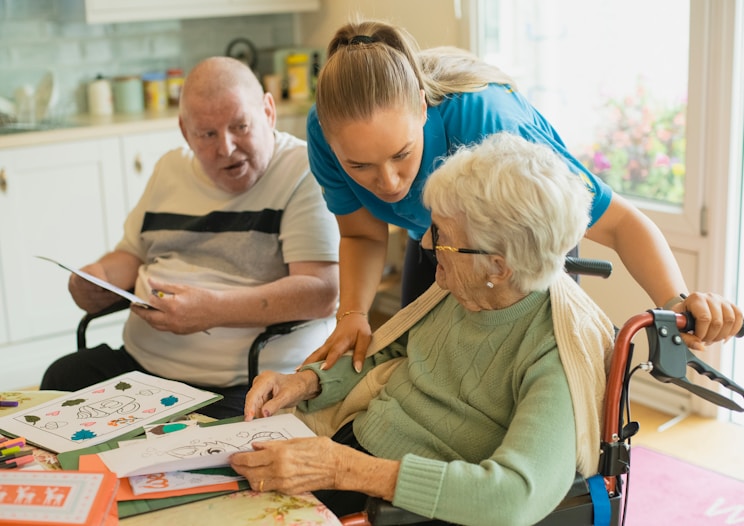
The Effects of Caregiving on Family Caregivers
Caregiving can be deeply rewarding, but it also takes a significant toll on the caregiver's own physical health, mental well-being, and finances.
Read ArticleCaregiver burnout. It’s a state of physical, emotional, and mental exhaustion we see happen when you don't get the help you need, or you simply try to do more than you can handle (whether physically or financially). Sound familiar? That’s why we created this guide. We will explore the common signs and causes of caregiver fatigue and provide real strategies for prevention and recovery. Understanding what’s happening is the first step toward building a sustainable care plan that supports your loved one, and just as importantly, supports you.
Nearly one in three adults in the United States is an informal or family caregiver. That number might seem high, but does it feel surprising? You could be one of them. Perhaps you’re supporting an aging parent, looking after a spouse with a chronic illness, or raising a child who has special needs. At Support Plus Personal Care, we know this demanding work is always rooted in love. We’ve seen firsthand how it can be a rewarding experience (even a beautiful one) that strengthens family bonds in powerful ways.
But that love doesn’t make the work any less demanding. It’s one of the hardest jobs anyone can take on, a reality we see every day. That constant physical and emotional output takes a toll, causing very real stress and a fatigue that settles deep in your bones. And when you try to just ignore that pressure, it doesn't simply disappear. It builds. It compounds. What starts as a manageable strain eventually snowballs into a state of complete exhaustion.
And that’s the path to burnout.
But what if you could see that slippery slope before you even started sliding? Recognizing the warning signs is the first real step toward getting help, and frankly, it’s the key to preventing burnout before it takes complete control.
Caregiver burnout is a state of deep physical, emotional, and mental exhaustion. So much more than just a bad week. It's the destination you finally arrive at after a long, difficult journey fueled only by stress.
While stress often feels like over-engagement (that frantic, urgent need to do more), burnout is the complete opposite.
Disengagement. Hopelessness. The feeling of being totally drained.
From our perspective at Support Plus Personal Care, this point is critical. Experiencing burnout is not a personal failure, nor is it a sign you have stopped caring. It’s a predictable response to being overwhelmed for too long without the right support. This is exactly why learning to prevent it is so vital. Your own well-being depends on it, and that’s where resources like respite care for family caregivers can make all the difference.
That kind of fatigue rarely stays confined to your caregiving duties. It has a way of seeping into every corner of your life, eroding your health and straining your most important relationships. This process eventually diminishes your capacity to provide the very care your loved one needs. So, knowing what burnout is represents the first part of the puzzle. Recognizing the specific symptoms in your own life is what comes next.
Caregiver burnout doesn’t happen overnight. It is a process, not a single event. It often creeps in so gradually that you don’t recognize what's happening until you’re deep inside it. At Support Plus Personal Care, we’ve seen this progression move through what are typically four distinct stages.
When you first step into a caregiving role, you are often committed and full of energy. It’s a powerful feeling. You're positive about this new responsibility, with an enthusiasm that comes from a very genuine place (a real desire to help). This is the stage where you might willingly put your own needs on the back burner to provide the best care possible. You feel like you can handle anything.
That early optimism can start to wear thin once the daily reality of your role sinks in. The demands feel constant. This is the point where caregiver stress truly takes root. We often see the first signs of burnout here: rising frustration, a persistent sense of anxiety, and deep fatigue that sleep just cannot seem to fix.
The stress is no longer just an occasional problem.
Here, stress morphs into a constant companion. Irritability starts to creep in, maybe even resentment, and then you feel guilty for feeling that way. It's a vicious cycle. We see so many caregivers begin to withdraw from friends and the hobbies they once cherished, simply because the time or energy is gone. The physical symptoms also get louder. Headaches, stomach trouble, and changes in appetite become much harder to ignore.
And then you hit the wall.
At this stage, you may feel emotionally hollowed out, just completely empty and unable to cope with the demands of caregiving for one more day. A strange sense of detachment can set in, making it feel almost impossible to connect with the person you love. This is a dangerous place to be, putting the health of both the caregiver and the care recipient at very real risk.
Recognizing these stages is the first real step toward prevention. But understanding the specific triggers and risk factors that can accelerate this journey is just as critical.
Some circumstances and mindsets just pile on the stress, pushing you closer and closer to burnout. At Support Plus Personal Care, we’ve seen how these factors rarely exist in isolation (they almost always overlap), creating a heavy burden for family caregivers. Recognizing them in your own life, however, is the most powerful first step you can take toward preventing them.
A handful of key risk factors tend to show up consistently:
The line between being a spouse and a caregiver (or a child, or a friend) gets blurry. Quickly. It can feel like you're losing a core part of your own identity in the process. So many caregivers also carry the internal pressure to make their loved one better, a belief that asking for help is a sign of personal failure. That way of thinking just isn’t sustainable, especially when demands come from every direction: the person you’re caring for, other relatives, or the intense standards you place on yourself.
Frustration builds fast when you feel powerless.
This can happen for many reasons. Maybe it's a lack of money, with high healthcare costs colliding with lost income to create a constant financial strain. Or perhaps it's a lack of the right resources or feeling unprepared to manage complex medical tasks. All that time and energy has another effect, too. It can slowly but surely cut you off from friends, hobbies, and the support systems you need for strength. And in our experience, the risk is higher when caring for someone with a progressive disease like Alzheimer’s, where the needs constantly escalate, and the emotional toll of that journey is significant.
These pressures do more than just cause tiredness. They create a specific, deep emotional exhaustion.
Here’s where we need to draw a careful line, though. There's another challenge caregivers often face where the symptoms look almost identical (which is why this gets so confusing), but the root causes are entirely different.
That other challenge is compassion fatigue, a form of secondary traumatic stress that can hit hard and fast, unlike the slow, grinding process of typical burnout.
Think of it this way. Caregiver burnout leaves you feeling ‘worn out’ by the sheer volume of tasks and demands. Compassion fatigue, on the other hand, leaves you feeling ‘weighed down’ by the empathy you have for the trauma and suffering of the person you care for.
The difference is subtle, but it matters.
The symptoms often look the same, which is why so many caregivers get them confused (and it's an easy mistake to make). But their origins are entirely different. Understanding where the feelings come from is the key.
Caregiver burnout is a slow burn. It's the result of prolonged stress from your environment, the endless to-do lists, the heavy mental load, and the feeling of having no support that eventually builds into emotional exhaustion and a sense of detachment. You might even feel cynical.
Compassion fatigue, however, can show up fast. It can be triggered after a single traumatic event or simply from the continued exposure to someone’s intense suffering. This is an empathy-related stress response, and the symptoms can feel a lot like PTSD (including things like hypervigilance, anxiety, or intrusive thoughts centered on your loved one’s pain).
Here’s where things get complicated. It’s common for caregivers to experience both conditions at once, putting them in a confusing and isolating position. A heavy burden, to be sure. But there is good news. Many solutions effectively address both problems, so while knowing the difference helps you identify the core issue (which is valuable), the path forward toward protection and recovery often involves the exact same foundational strategies.
So what can you do to prevent caregiver burnout and compassion fatigue before they take hold?
There’s no magic pill.
The solution isn't a single action but a whole system, a deliberate plan for support and self-preservation that allows you to reclaim your own well-being. We believe this is the only way you can continue providing the excellent care your loved one deserves.
The single biggest mistake a caregiver can make is believing they have to do it all alone. That’s a direct path to exhaustion. You have to ask for help, but the key is being specific. A vague plea for support is easy to ignore, while a concrete request for something manageable (like picking up a prescription or staying for an hour on Tuesday) gives people a clear way to contribute. The reality is, friends and family often want to pitch in. They just don’t know where to start.
And what about support groups? Connecting with people who truly understand your caregiver stress, whether online or right in your own community, is a powerful antidote. It breaks the isolation that so easily creeps into this role.
Asking for help from friends and family is one thing. But what happens when you need more structured support? That's precisely where professional services, specifically ‘respite care for family caregivers`, become so important. It’s designed to give you a short-term break, that critical window you need to rest and recharge. A real reset. At Support Plus Personal Care, we see the positive impact every day, and this type of care can look a few different ways:
This isn't a luxury. It is a necessity for sustainable caregiving.
You’ve probably heard the saying: " You can’t pour from an empty cup.” We happen to think it’s spot on. Fighting the symptoms of family caregiver burnout isn’t about some complex secret; it’s about getting back to the very foundations of your own well-being. The basics. Nutritious food. Consistent sleep. Physical activity. And you don't have to start big, since even a brief 15-minute walk around the block can shift your entire mindset for the better.
We understand that caregiver burnout is a real and difficult condition. But it is not a life sentence. A challenge you can overcome. Your first move toward relief is simply learning to recognize the signs of caregiver fatigue. Remember this (it’s crucial): seeking help isn't a weakness. It’s a sign of true strength, and it is how you get ahead of long-term stress before it has a chance to take root.
Your first move toward relief is simply understanding the signs of caregiver fatigue. Remember this: seeking help is a sign of true strength. It’s how you get ahead of long-term stress before it takes over.
That's where professional respite care comes in. It’s that vital lifeline. This service gives you the space to recharge and just breathe for a moment (a necessity, not a selfish act), so you can return to your loved one ready to provide the excellent support they rely on. You don't have to navigate this journey alone. When the weight feels too heavy, we're here to help. Support Plus Personal Care delivers the professional, compassionate care your family deserves, empowering you to continue your caregiving journey with renewed strength and peace of mind.
Contact us today – let us be part of your support system.
Ready to talk to someone who understands your situation and can help you take the next step?
Contact us today at 262-420-4008 or fill out our free assessment form to start the conversation.
Caregiving can be deeply rewarding, but it also takes a significant toll on the caregiver's own physical health, mental well-being, and finances.
Read Article
Compassionate care leads to better health outcomes, faster recovery, and reduced caregiver burnout. Learn 5 key benefits of compassionate caregiving.
Read Article
The right agency provides safe, compassionate, and reliable care. Ask these 10 essential questions before you sign anything.
Read ArticleOur team is here to answer your questions, walk you through your options, and help you take the next step, at your own pace, with no pressure.